
Blog

  • Debt Consolidation: everything you want to know

    Debt Consolidation: everything you want to know

    If you are looking for debt relief, whether for student loans or credit card debt, you have probably heard of debt consolidation. But unless you have already faced challenges with debt, this may be the first time you encounter this concept. If so, this page is designed to teach you everything you need to know about debt consolidation.
    Body:Debt consolidation is a financial process in which you take several debts and combine them into a single monthly payment. In most cases, you can only consolidate debts of the same type. So, the consolidation of student loans is done separately from the consolidation of credit cards, in case you have both types of debt to eliminate.
    The consolidation objectives may vary depending on the type of debt and its financial situation. However, in general, it is consolidated to:
    • Simplify your bill payment program
    • Reduce your total monthly payments
    • Minimize or eliminate interests

    Things you need to know about debt consolidation
    • Do it on your own: It usually only works with simple and low debt volumes. Whether you’re talking about credit cards, student loans or tax debt, this advice is right. Consolidation “made by yourself” is usually the most effective when you have a low volume of debt. If you owe more than $ 50,000 from any type of debt, it is usually best to get professional help. This is also true if your situation is “complicated”.

    • Recognize that consolidation and liquidation are different solutions: People often confuse consolidation with debt settlement, but the two are very different. With debt settlement, the goal is to eliminate your debt for less than the total amount owed. On the contrary, the objective of consolidation is to pay everything you owe.
    Consolidation simply facilitates debt management within your budget. You restructure the way you pay the debt, so you can make the payments each month without having to fight. Although you can reduce interest charges, the principal or principal is always paid in full.

    • When done correctly, consolidation should not damage your credit: This is another way in which consolidation and settlement differ. The settlement of your debts for less than you owe, creates a negative observation in your Credit Report. This lasts seven years from the date of the discharge of the balance owed.

    On the other hand, debt consolidation should not negatively affect your credit if you execute your plan correctly. In fact, in most cases, consolidation improves your credit score. Create positive credit history every time you make a payment on time. It also reduces your total debt burden, which also helps you achieve a higher credit score.Normally, the only time you consolidate the debt, you can damage your credit, is when you stop making a payment or leave the consolidation program.

    • Re-consolidation is normally allowed: Generally, if you consolidate the debt and your plan does not work, you can usually re-consolidate with another solution. For example, let’s say you use a personal debt consolidation to consolidate a credit card debt. Then, as you pay off the loan, you accumulate new balances on your credit cards. Then he starts having difficulties to make the payments again. You can re-consolidate, using a broader debt consolidation loan, or enroll in a debt management program. In both cases, the original consolidation loan can be included in your new plan.

    • Consolidation is not always guaranteed to reduce your payments:Two of the federal payment plans that you can use to consolidate federal student loans can actually increase your payments. The standard refund is designed to pay off all your loans in 10 years or less. This allows you to get out of debt quickly, but the compensation is that you can have higher monthly payments. With repayments or graduated depreciation, payments start low, but then increase by 7% every two years. As a result, the final payments you make may be even higher than the standard plan.
    Even with credit card consolidation, lower payments are not guaranteed. Since this type of consolidation works to reduce or eliminate interest charges, it usually decreases your monthly payments, too. However, depending on the amount of debt you have and the length of the payment schedule, payments may be higher.
    Conclusion: If you have very good credit, should you consider options for debt consolidation, such as “do it yourself”, so you can avoid damaging your credit.

    If you simply cannot afford to pay all you owe, then you should explore options such as debt settlement. This is where you can settle your debts for less than the total amount owed. However, it is important that you know and be forewarned, because this could damage your credit significantly in the years to come.
    If you cannot find any option that works for you, bankruptcy is the final solution you can use to get a fresh start.

  • All you should know about Cyber Insurance Policy

    All you should know about Cyber Insurance Policy

    Cyber Insurance Policy is a fundamental tool to help companies protect their assets against possible security leaks, hacker attacks, computer viruses, dishonest or negligent employees, information leakage and identity theft, among others.
    Cyber risk insurance covers the insured against attacks by viruses and hackers. They are designed to protect companies from the risks, both online and offline, to which they are exposed and which can lead to large losses.
    Main insured of cyber risks
    • The society
    • Administrators, managers or partners
    • The head of security, director of compliance or director of the internal legal advice of the company
    • The employees
    Coverages adapted to the needs of each company

    Responsibility for claims for breach of data privacy: a policy covers the damages and expenses of defense against claims arising from a violation of data and / or confidential information, both in paper and digital format.
    Responsibility for claims regarding network security: it covers the damages and expenses of defense against claims derived from a failure of network security.

    Responsibility for claims for media activities: it provides protection for damages and defense costs derived from claims for the management of content on websites and social networks.

    Information retrieval and lost data: it covers the cost of recovering your data derived from an incident that consists of hacking, human error, programming error, denial of service attack, malicious computer programs, use or unauthorized access, power failure, network overload.

    Incident response expenses:
    Service of attention to incidents, from the hand of experts consisting of

    A. Computer forensic services.

    B. Notifications to the consumer within the framework of existing legal provisions.

    C. Legal advice for the response to regulators in the framework of data protection regulations.

    D. Voluntary information to the people whose data has been compromised.

    E. Support service of a call center for notification purposes.

    F. Consulting services regarding fraud to people whose data has been compromised.

    G. Expenses for credit control, identity theft control, social media control, credit freezing, fraud alert services or softwareof fraud prevention.

    H. Identity restoration services
    I. Image restitution services.

    J. Legal advice for the sole purpose of establishing your compensation rights under an agreement with an external provider.

    Cyber extortion: Financial protection for an extortion event. Under this extension we will cover the expenses generated by the hiring of specialists, in addition to the damages and losses necessary to end the extortion.
    Loss of profits due to interruption of activity:Financial protection for the paralysis of the activity derived from an incident that consists of hacking, human error, programming error, denial of service attack, malicious software, blackout, network overload, use or unauthorized access.

    Administrative sanctions: a policy covers the sanctions imposed by a supervisory body under an administrative or regulatory procedure. Within the framework of coverage liability for breach of privacy and responsibility for network security.

    What measures should a cyber-insurance policy take in cyber security?
    The ESET Latin America team, a proactive protection laboratory for security threats, made five recommendations that cannot be lacking in a company, because they are the basis of corporate management:
    1 – Antimalware software
    According to the report last year almost half of the companies in Latin America suffered a malware infection. And in addition, 16% described that these infections were with ransomware variants, a malicious code that encrypts the information or blocks the computer and then asks for a monetary rescue so that victims can access them again. For these reasons, robust security software is fundamental in any type of security plan.
    2 – Email
    The mails are still the most used attack vector because it is massive and economical to propagate an attack. It is necessary to have security measures in the servers and anti-spam solutions. In addition, the important thing is to educate the members of the companies so they know that they should not open files that may seem suspicious and ask certain questions before clicking.
    3 – Software updates
    It is a fundamental and universal control for any type of company. Updates not only bring about improvements in operation and code corrections, but the use of older versions represents a risk, especially if they are applications used to manage the business. If there are vulnerabilities or unpatched errors, they could be exploited to compromise a team or a complete corporate network.

    4 – BYOD
    The use of personal equipment for corporate purposes is a reality. SMEs, for reasons of budget, cannot always equip their entire staff with corporate equipment for work. Therefore, an organization must consider educating employees on how to use their equipment correctly, and invest in security solutions for such equipment; especially because they handle company data that, if compromised, can cause incident that affects the continuity of the business.

    Conclusion: Many organizations start from the premise that the information they handle is not important but, in fact, cyber criminals start from that premise to attack those who believe they go unnoticed. It is vital to have not only technological solutions such as an antivirus , but also a correct management of these controls and work to raise awareness among employees, who represent the weakest link in the chain.

  • Peer Lending Popular in Singapore

    Peer Lending Popular in Singapore

    In the event that your business needs capital (working), or you’re hoping to expand your speculation portfolio, the following are fundamental P2P loaning stages for you to review:

    1. Capital Match Singapore

    2. Subsidizing Societies

    3. Minterest

    4. MoolahSense

    5. CoAssets

    Do take note of that these loaning stages just give SME advances at the season of composing (2019/January). All the referenced stages are additionally controlled by MAS (the Monetary Authority of Singapore).

    How does shared loaning work, and would it be right for you?

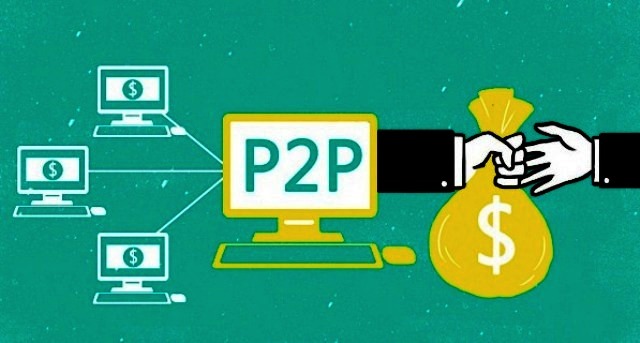
    Distributed (P2P), or friend to-organization (P2C) suppliers don’t coordinate individual moneylenders straightforwardly with a loaner. Or maybe, they empower the bank to put resources into an arrangement of purchaser advances. At the end of the day, the P2P supplier encourages a stage where speculators can fund an arrangement of advances and acquire enthusiasm on what they loan, while loaner is given a special rate dependent on their FICO assessment and different elements. Borrowers. To acquire, you present your proposal to the P2P moneylender.

    The supplier at that point assesses your qualification for a distributed advance by confirming your personality, record of loan repayment, work or financials. He will evaluate the danger of the credit and give you a customized loan cost. After endorsement, your credit will be subsidized by a few financial specialists. The loan supplier will, for the most part, cut an initial charge from the sum exchanged. Financial Specialists. Potential financial specialists audit the accessible proposals on the site and recognize the person they might want to support.

    How are distributed advances changing the Singaporean money related scene?

    Given the simplicity with which numerous individuals – speculators and loaner – can verify credits at ideal terms by means of P2P loaning, plainly these suppliers are digging in for the long haul. The shared business is looking at a major potential market. Its comfort and aggressive loan fees improve its intrigue in contrast with standard monetary foundations.This is likewise the main acquiring stage to open the ways to littler financial specialists searching for good and secure returns (progressively).

  • First-Time Home Buyers Guide: Buying With a New Job

    First-Time Home Buyers Guide: Buying With a New Job

    Ideally, when you’re ready to buy your first home, you’ll have been working a great job for a few years, have a promotion within the company on the not-so-distant horizon, and will feel confident, stable, and ready for growth in your career as well as in your new home. Unfortunately, life doesn’t always work that way. Sometimes, the best job opportunities arise at the worst possible times, such as while you’re house hunting.

    If you’ve already accepted that new job, will you need to build up your employment history all over again? Will you really need to wait a few more years to buy your first home? Not necessarily.

    What Employment Factors Do Lenders Consider?

    Lenders typically prefer a solid employment history of at least two years with the same company. While it’s true that the underwriter of your loan will verify the employment history you provide – including dates, title, likelihood of continued employment, and income – and will raise a red flag if it appears things have changed since you submitted the information, there’s more to be considered than the two-year time frame.

    An underwriter will request you to provide at least two years of work history, and will use that information to determine your income. Whether you have a salary, hourly wage, commission, or some combination of the two, the underwriter will calculate your average monthly income to determine how much mortgage you can afford. A job change, negative wage change, or gap in employment history can raise a red flag when it comes to ensuring you have adequate income for a mortgage.

    What if You’re a First-Time Home Buyer With a New Job?

    First, you’ll need to consider whether your new job makes financial sense. If your move seems risky, such as a transition to a completely new career field or a potentially unstable new employer, your new job could negatively affect your ability to get a loan. If you are moving in a positive direction to a job offering a higher salary or more benefits, the underwriter will not usually see much of a problem.

    Keep in mind that lateral moves with the same pay should be to a higher-quality company or a company providing more benefits. Lateral moves without a pay increase can make it seem like you’re an unstable employee without a steady source of employment. If you’ve made a lateral move for some other reason – a job that won’t require an hours-long commute, doesn’t rely on commission, or some other stabilizing feature – the underwriter can consider these factors.

    What if You’ve Received a Job Offer?

    If you’ve received a job offer but are still with your original employer, you may want to consider making the actual change after the home loan process. Keep in mind, however, that if you are pre-approved with your original income, your best bet is to continue with your original employment until the buying process is complete. Since purchasing a home can take as many as 60 days from start to finish, you may want to consider other options.

    If you have an offer letter in hand from your new job, and that job is a positive career or lifestyle move as described above, your lender may consider an offer letter mortgage. An official offer letter from your new employer should detail the position, the terms of your employment, start date, salary, and signatures from both parties. Your lender is essentially looking for proof that you will maintain steady for the next three years, and an offer letter can provide such proof. You won’t receive the funds until your first pay stub from the new job, however.

    What if You’re a New Graduate?

    Recent college graduates may not have the steady employment history usually required of first-time home buyers, but education is often reason enough for lack of steady employment. If you are moving right from college into your chosen career field, most lenders will not see a problem. However, if you’ve had a significant time gap between graduation and your first job, or if your job is not related to your degree, an underwriter will likely raise a red flag.

    What if You’re Moving?

    Many people move while in the process of beginning a new job. If you’re moving to Seattle, for instance, from some other location in Washington state, your lender will need to balance the cost of homes in the area with your new income. In addition, you’ll likely need to prove you have sufficient cash reserves or employee moving benefits from your new job to handle a move. Finally, the loan must usually close within 60 days of beginning your new job, and you’ll need a pay stub to receive the funds.

    Beginning a new job doesn’t have to be a black mark on your employment history, especially if you’re a first-time home buyer that qualifies for the multiple first-time home buyer programs. As long as the job change is a positive financial move and you have the required credit history, your home buying adventure should continue without a hitch.

    About the Author:
    Information is provided by Sammamish Mortgage, a Premiere Mortgage Company in Pacific Northwest including WA, ID, OR, CO.

  • Forex Beginner’s Guide Learn how to trade currencies online

    Forex Beginner’s Guide Learn how to trade currencies online

    The Forex is short for Foreign Exchange, the English name for the currency. Currency is the market where one country’s currency is exchanged for the currency of another country. One may need forex when doing international business for example, or personally, when traveling.

    The currency market is a volatile market where sometimes you can make very large gains. Such large gains come with a potential for substantial loss.

    Hedging and Currency Trading

    The foreign exchange market has its usefulness. It allows companies that trade internationally to limit their risks by hedging their foreign exchange risk. It is known as hedging. To hedge currency risks, companies will eventually buy currency pairs. The forex market is the largest market in the world today, because to companies looking to hedge is added a mass of currency speculators: major banks, hedge funds, investment funds, hedge funds, brokers and individuals who joined this market not so long ago.

    This market is very successful because it is a liquid market. In the beginning, forex beginners may find this a bit complicated, but in the end it’s a market like any other: supply meets demand and there are sellers and buyers. Currency prices vary widely and there are several factors that can affect the value of a currency: interest rates, trading flows, tourism, growth of various countries, geopolitical events and more again. In the currency market, as in any other market, when you buy a currency pair, in front you have a seller who sells the same pair of currencies.

    The Complete Guide to Forex

    The forex market is a decentralized market with no clearing house. This is an OTC (Over the Counter) market. The interbank market is made up of many banks that trade currencies against each other around the world. The risk in the currency market is counterparty risk, as there is no clearing house. Each bank displays its purchase price and its selling price and the formation of the price is given by the market. Negotiated volumes are very important and there is hardly anyone who can influence currency rates significantly. The daily volumes are from 2000 – 3000 billion dollars. Only central banks can influence prices by their interest rate decisions.

    Attempts are being made to create ECN (Electronic Communication Network) networks to bring buyers and sellers into a centralized exchange so that traders can see the order book and the depth of the market. This is a positive move for the individual traders who will gain an advantage by seeing the volumes.

    The risks on the forex are similar to those of the other stock markets. an investor may lose his capital if he makes a bad trading decision.

    Advantages of Forex Trading

    The currency market is the largest in terms of traded volume in the world and offer deep liquidity. It is thus easy to go in and out of position quickly without worrying if we will find a counterpart.

    Significant leverage is available in this market. Forex brokers offer different leverage that can range from 10 to 1000. It is very important that the leverage is mastered by the trader because it amplifies the gains, but also the risks.

    Another advantage of the currency markets is the fact that you can trade 24 hours a day, trading starts in Australia and other major places follow: Sydney, Hong Kong, Singapore, Tokyo, Frankfurt, Paris, London and New York.

    Currency trading is a “macro-economic” trading. Negotiating currency pairs is like comparing the two economies. Some traders find it easier to interpret currency pair movements than movements in technical markets, such as the options market or the futures market.

    How to Trade Forex

    There are several ways to trade Forex:

    • Scalping / arbitrage with a large capital
    • leveraged trading
    • hedging
    • long-term currency trading

    Forex scalping with large capital is possible for banks and other financial institutions. Professional traders develop arbitrage strategies and run them on very large sums of money. It is true those in the currency market changes in quotations are weak and that large volumes of orders are needed in order to generate some profitability.

    Traders who use leverage are traders who cannot afford large banks but want to exploit the volatility of currencies as well. The risk of this kind of trading is that leverage can increase losses and gains.

    Hedging is a protection trading against a risk. An exporting company that will receive 1 million dollars in 6 months needs to protect itself against the volatility of the euro today, in order to cover its costs. In the same way, a US investor who buys European stocks and wants to sell them in 1 year must protect himself from the volatility of the Eurodollar, because this investor will have to have dollars at the end of the period and his shares are in dollars. Hedging is a zero sum game, but it allows you to close the gain / loss at the rate desired by the investor. Always remember that forex is a very volatile market. Trading strategies based on volatility can be considered in this market.

    Conclusion: Forex is a risky market that offers earnings opportunities too. It cannot be stressed enough that trading the forex with leverage is a risky thing and that it does not suit any type of investor.

  • Slow steps to be a millionaire

    Slow steps to be a millionaire

    Being a millionaire is probably the great dream of many and, although achieving it is not something that happens overnight. It is incorrect to think that this is impossible, especially if good habits are acquired.

    Money is not everything. Maybe for you the money is almost at the end of the list. Everyone has their own definition of success. Everyone has to confess that money did matter to them at some point in time in their life.

    In most cases, there are people who want to achieve wealth:

    • In fast mode that is to say quickly
    • In lazy mode that is to say without working
    • And finally as many of to become rich without money, without input or from nothing.

    Starting from these questions above, yes it is possible to become rich quickly, without working and also starting from scratch. But everything depends on what you have in your head. But one must understand one thing above all else, you cannot get rich without doing anything, it is virtually impossible. The rise to riches requires sacrifices that many cannot do.

    Reason why many are not rich

    All of us want to enjoy a good holiday, travel, buy beautiful cars, new phones, get dressed, and visit the most expensive restaurants and hotels. But in reality, we do not have the means to take advantage of all these needs. So quickly, to satisfy our needs we do not hesitate to get into debt. As you read above, one is not getting rich by going into debt. Paying off one’s debts is one of the steps towards wealth. And if you were asked the question, what does it mean to become rich?

    Having $ 3000 each end of the month can be a source of wealth for someone to qualify among the rich, while the other is only a pocket money. It is only from this illustration that you can understand that being rich has absolutely nothing to do with the amount of money that one can have, but on the contrary it is in the investment that we discover to be rich. And on the other hand, the definition of becoming rich has been much more about being a millionaire. While some once he starts winning 3 or 4 times what he earned automatically rises to the rank of the rich. And the more one wants to become a millionaire. One loses one’s concentration of becoming rich, because there is an amount that determines our effort.

    We will discuss about the kind of things should you do to increase your chances of joining the club of millionaires.

    1. Stop obsessing with money

    Discover if what you do distracts you from the things that would really help you grow your fortune. Change your perspective. You should see money not as your main goal but as a result of doing things well.

    1. See making money as a way to do more things.

    In general there are two types of people:

    1. One does things because he wants to earn money. The more things you make the more money you will have. It does not matter much about your product or service; they will do whatever it is while customers pay you.
    2. The other wants to make money because this will allow them to do more things. They seek to improve their product and extend line. They want to create another book, song or movie. They love what they do and see earning money as a way of doing more than they love.

    Although it is possible to find a product that everyone wants and you become rich when selling that product, many successful entrepreneurs evolve and grow when they earn money and reinvest it in an incessant search for excellence.

    1. Resort to loans only if that help you win: Golden Rule.

    Never borrow money that will not help you earn more. Consider what will be the final profit you will get thanks to the money you will borrow and consider if this will be sufficient not only to pay the loan back, but to continue producing money in the future.

    1. Treat the work as a friend

    Although it seems logical, it is necessary to emphasize that work is our main source of income. Do not take your position for granted and treat it as the best of your friends: spend a lot of time with it, do not ignore it and, of course, do not abandon it. A millionaire is not done from one moment to the next, much less with a bad attitude towards work.

    1. Open different ways of income

    Do not concentrate only on one source of income. Consider acquiring a second part-time job, start a small business or rent all your belongings, this will help you increase your monthly earnings much faster.

    1. Invest in yourself

    Every good millionaire knows that his main generator of capital is himself. Therefore, it is important that you invest in your education and allow yourself to constantly acquire new knowledge through trips, courses, workshops and specialties that help you learn how to grow your money.

    Conclusion: Set goals, create routines that support those goals and make a record of your progress. Fix what does not work. Improve and repeat what works. Seek to be better than you were yesterday. Soon you will be good, then you will be excellent and one day you will be the best. The day will come when, without you noticing, you are a millionaire, if that kind of thing interests you.